I grew a SaaS to $1M
It took 512 days. Here are 3 lessons I wish I knew earlier.
 Marc Lou5,486 views
512 days ago, I set myself a very specific goal.
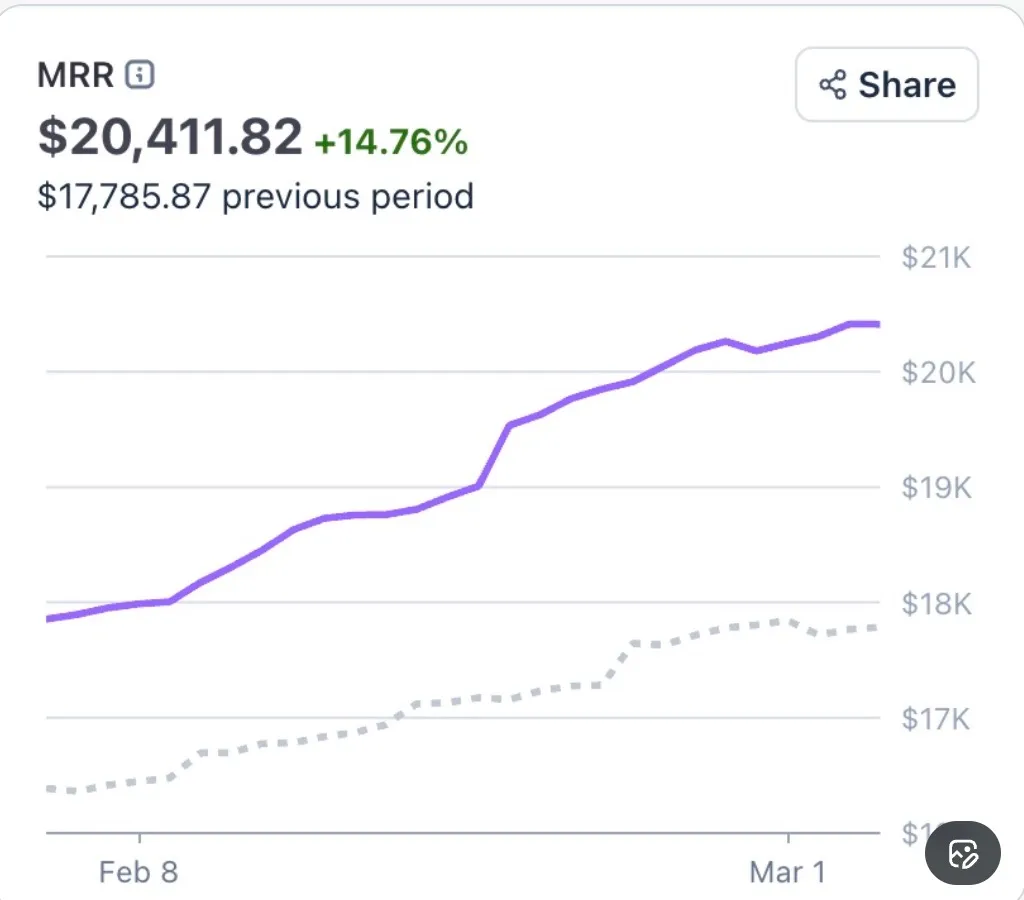
I wanted to build a software business worth $1 million. $20,000 in MRR. With a conservative 4× multiple, that’s a $1M business.
A few days ago, I crossed that number. Here are 3 lessons I wish I knew earlier.
Built-in-public update 🧑💻
The last few months have been crazy.
I moved to Cyprus
I built an iOS app, and 4 apps in 4 days, because AI is so good
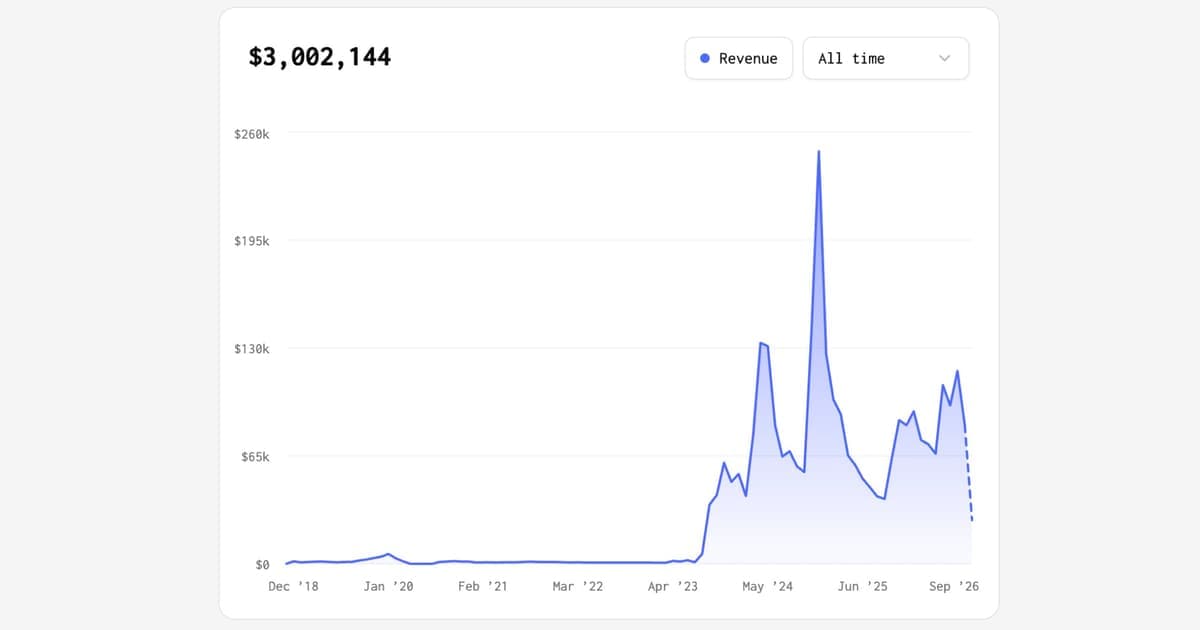
More than one startup now gets acquired every day on TrustMRR, making this vibe-coded website my new #1 source of income.
The AI gold rush people will talk about later is happening right here, right now.
In 2024, I was using Plausible for analytics and Stripe for payments. Which meant that every day I was opening two dashboards.
One to see how many visitors I had.
One to see how much money I made.
But the one thing I actually cared about didn’t exist anywhere: Which visitors made money.
I didn’t want to know that I had 3,000 visitors.
I wanted to know that Google brought $2,400, or that 𝕏 brought $700.
So the idea for DataFast was simple.
Take the traffic analytics
Connect it to the revenue
And make revenue attribution the main metric
I spent a few weeks building a very rough MVP. It started as a very simple analytics dashboard, similar to Plausible, but with Stripe revenue added on top.
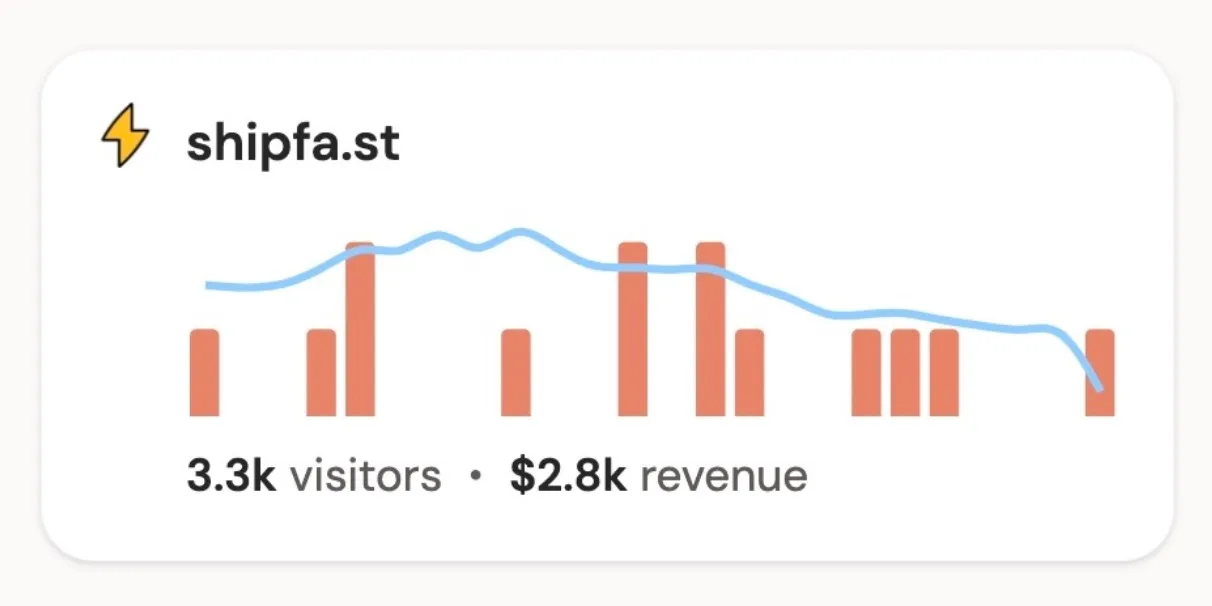
When I launched it, there were exactly four users.
Me. And three friends.
The public launch on 𝕏 brought the first few dozen users and around $500 in MRR.
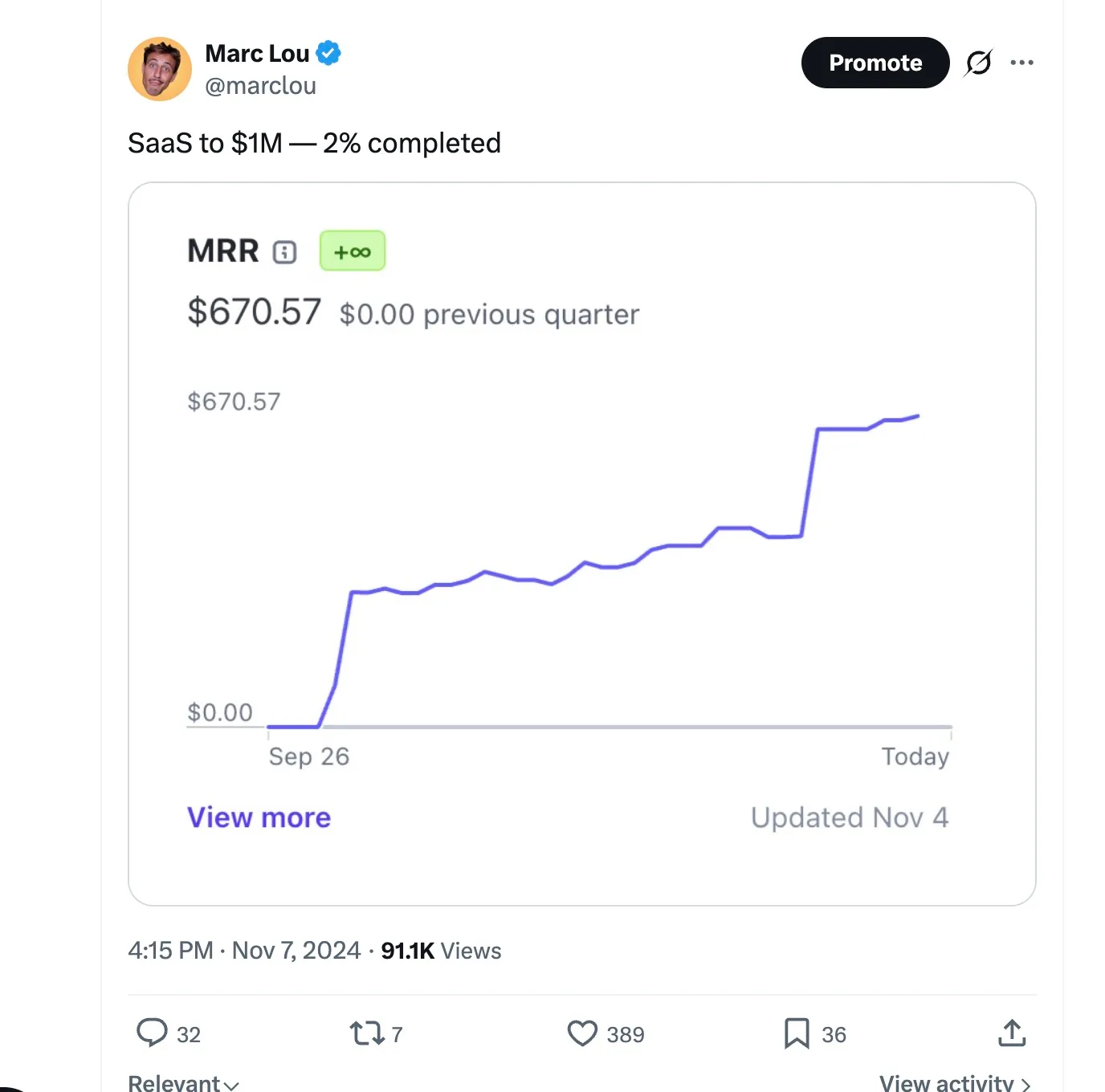
For the next few months, I basically worked on DataFast every day.
And progress felt painfully slow. It took four months to reach $1K MRR. I remember thinking many times that it probably wouldn’t go anywhere.
You work all day, ship features, answer users, improve things… and at the end of the month, the revenue barely moves.
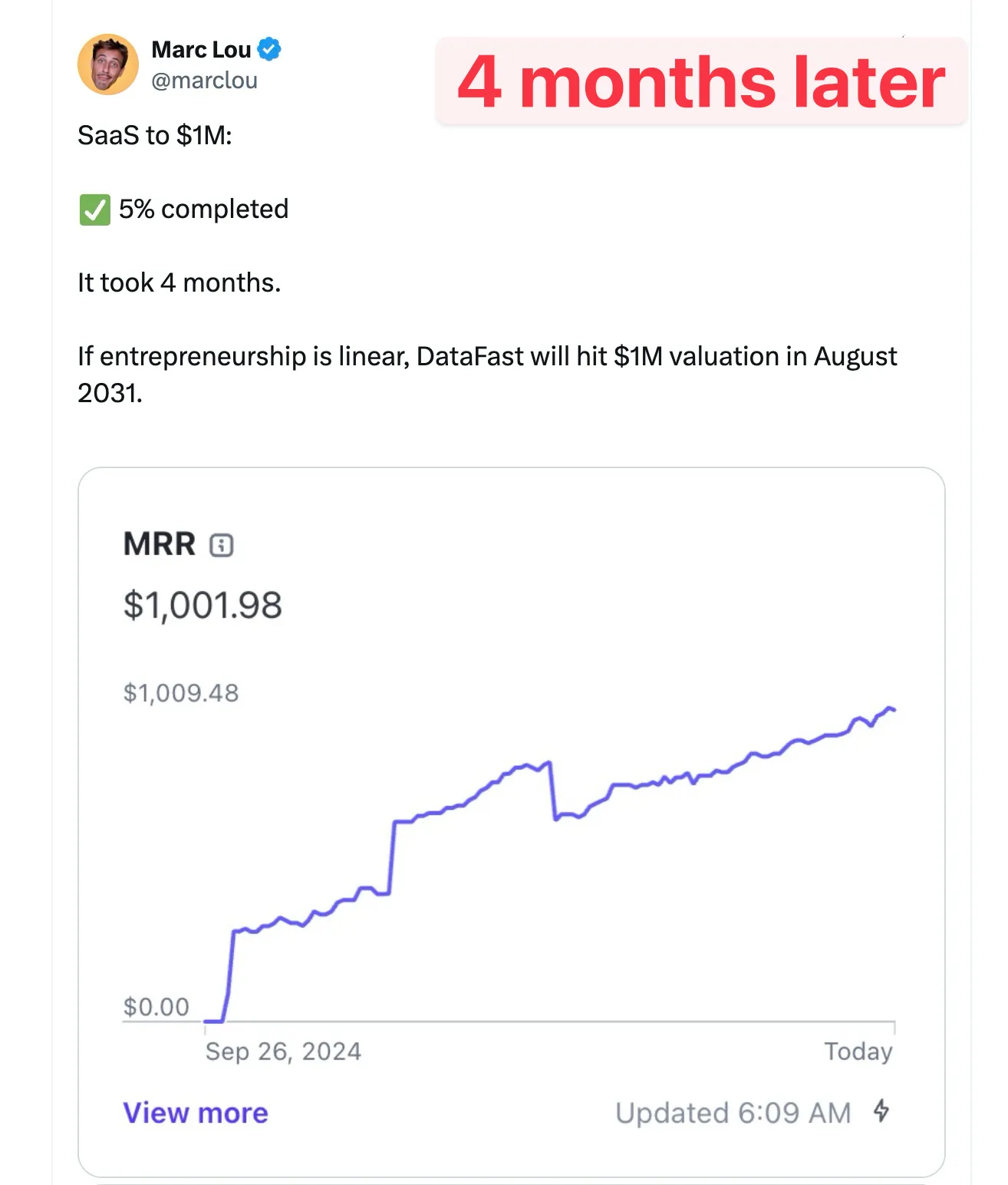
Then something subtle started to happen.
Every month, MRR grew about 10%. Each month was slightly better than the previous one. And over time, that compounding started to add up.
Little by little, the product crossed $10K MRR, and not long after that, it reached $20K MRR.
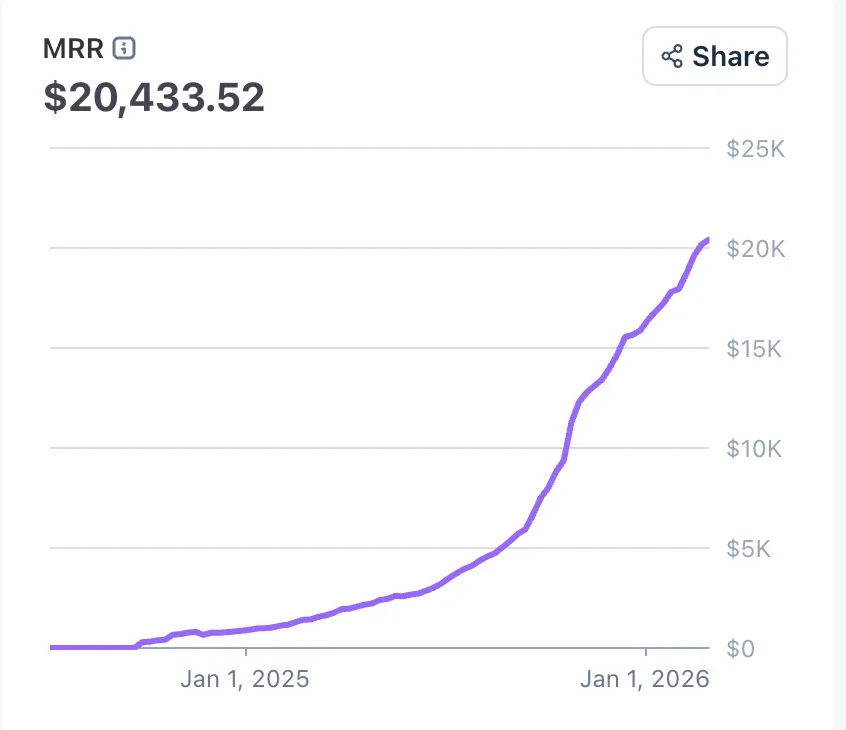
10% monthly growth = 310% yearly growth
The biggest lesson for me was that the beginning is by far the hardest part.
Getting to the first few thousand dollars in recurring revenue is brutal. That’s where most people quit. But once a product crosses that point, things start compounding.
A few things really moved the needle along the way.
#1 Positioning
The analytics market is crowded. There are dozens of tools. If DataFast had just been “another analytics tool”, nobody would have cared.
Things started to click when I positioned it as a revenue attribution tool.
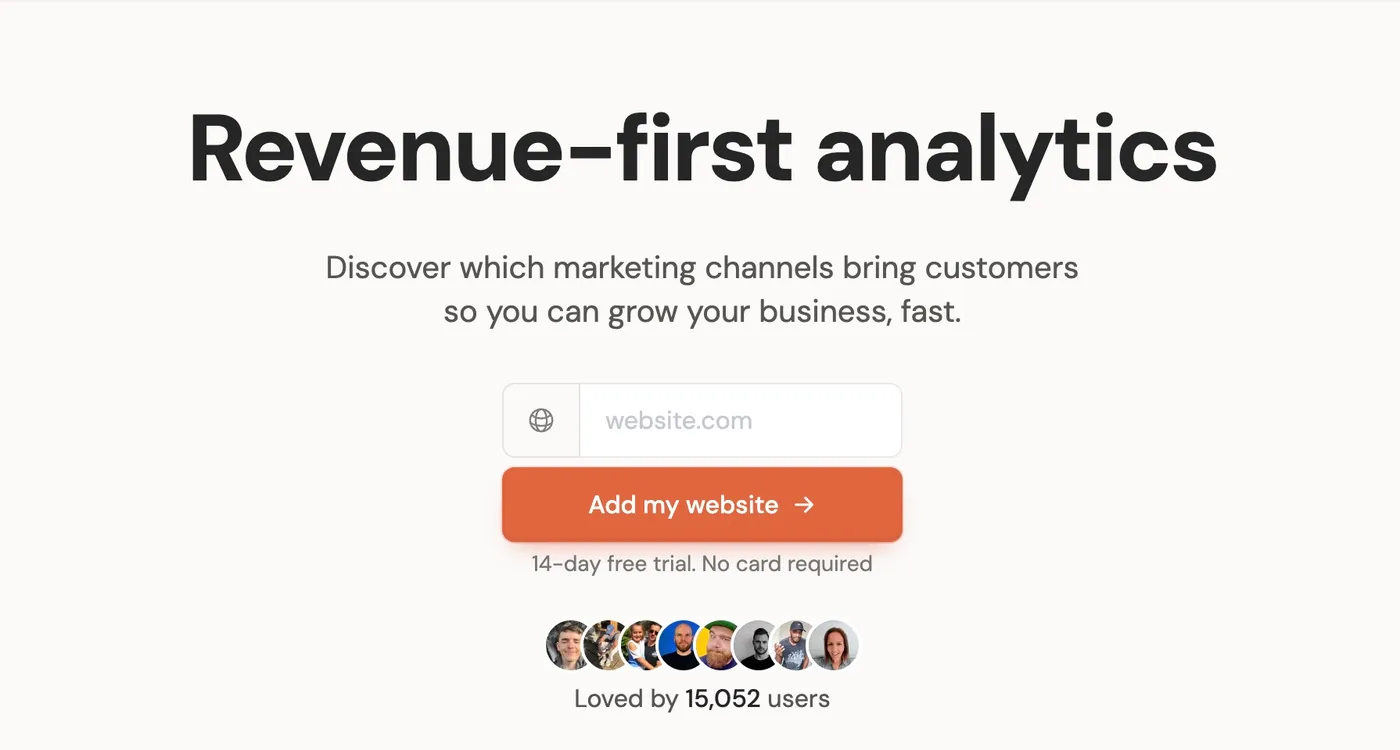
Your headline is 90% of your marketing
Instead of focusing on traffic metrics, the product focused on the one metric founders actually care about: where the money comes from.
That positioning came naturally because it was exactly the problem I had myself.
#2 Onboarding
I can’t stress this enough: get users to the aha moment as fast as possible.
For DataFast, it’s the moment when they suddenly see something like: “Google → $1,240 revenue”. When that appears on the dashboard, the product makes sense instantly.
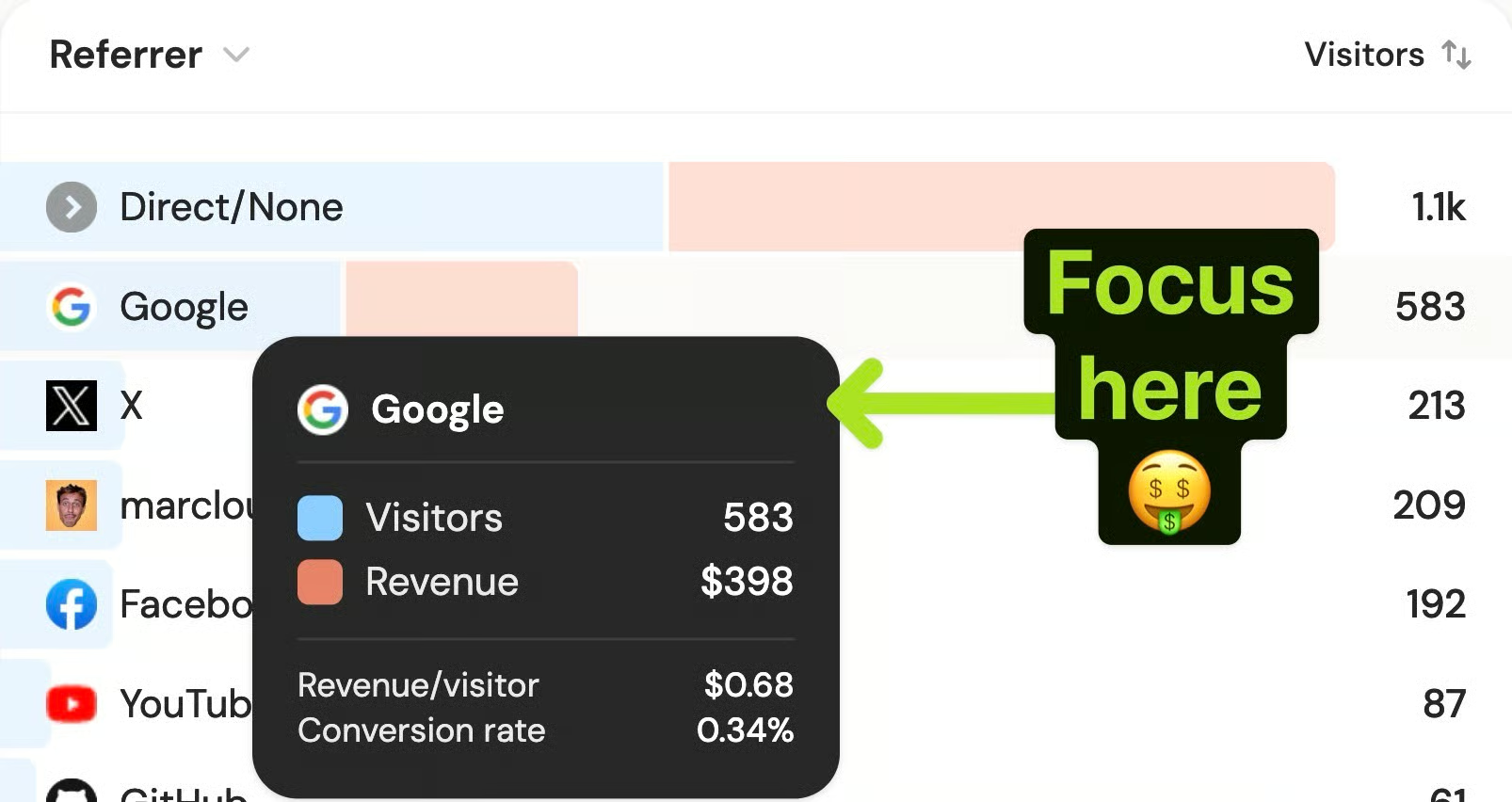
So I kept removing steps → shorter onboarding → less friction → more dopamine → higher conversions.
I wrote about onboarding and positioning in detail when growing DataFast from 0 to $5K MRR
#3 Anti-marketing
I don’t enjoy traditional marketing. I don’t like ads, cold outreach, or spending my days trying to “do marketing.” So my strategy became very simple: build features people want to show.
I built a real-time visitor map that shows traffic around the world. It looks cool. So users take screenshots and share them. People ask what tool it is. They reply with DataFast.
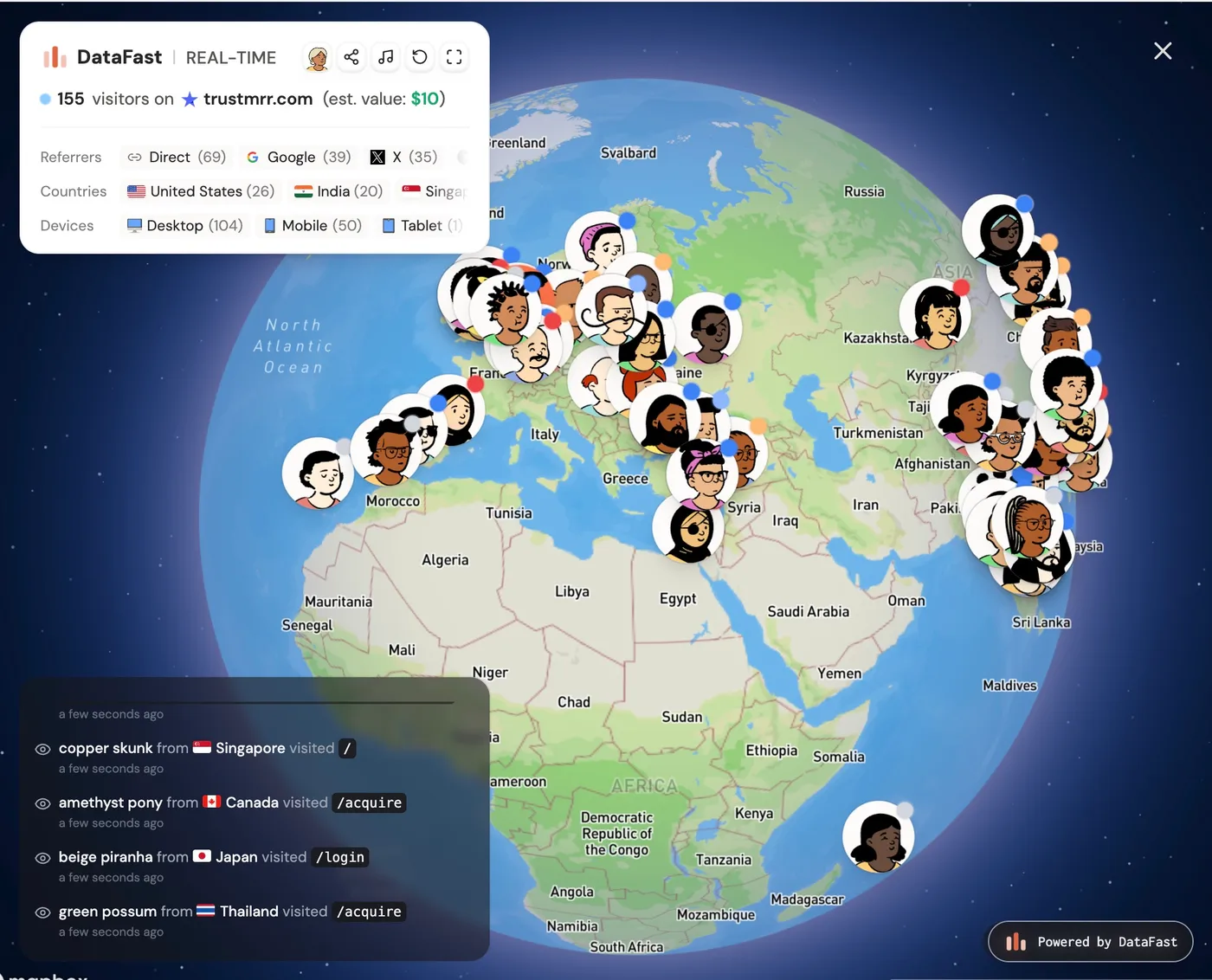
Give users something worth sharing and you’ll never really have to do marketing again
More recently I opened a full DataFast API, which lets users access all their analytics data programmatically.
Then I spent four days building four apps on top of that API.
One turns real-time analytics into a Severance episode. Every page on your site is a department. /pricing is a department. /blog is a department.
Your visitors are innies now. They arrive through the elevator. When they navigate to another page, they walk through the corridor to the next department. When they bounce, they walk out.

This 6-hour side project drove hundreds of users to DataFast
I think this direction will matter more and more.
We’re entering a world where AI agents will use software directly. And AI doesn’t click buttons. It talks to APIs.
My guess is that in the future, many products will simply expose powerful APIs, and users will interact with them through whatever interface they prefer. Generative UI.
DataFast now sits at a little over $20K MRR. Which means the original goal is technically achieved. But reaching a goal has an interesting side effect: you immediately set another one.
The new target is $1 million in ARR. That’s about $83K in monthly recurring revenue. At $20K MRR, DataFast is roughly 25% of the way there.
So the journey continues.
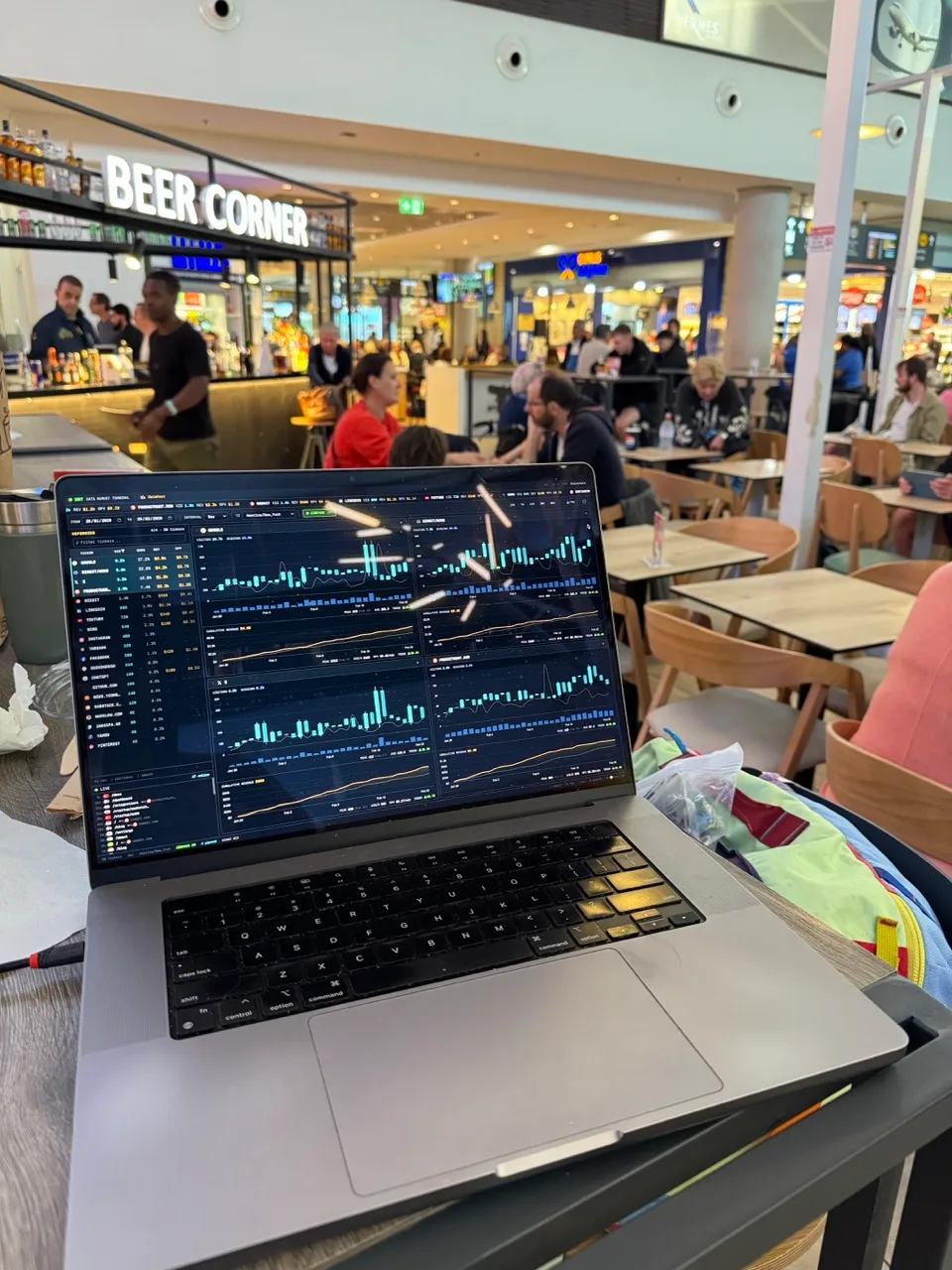
DataMarket is part of the 4 apps in 4 days challenge, and my new favorite way to check web analytics in public (I pretend I’m a smart stock market guy)
If there’s one thing I’d leave you with, it’s this: The beginning always feels slower than it should.
You work every day and the numbers barely move. But once something finally starts working, growth compounds faster than expected.
Most people quit during the flat part of the curve. If you survive that part long enough, the curve eventually bends. And when it does, things start moving very quickly.
I root for you.
— Marc Lou